
By Admin
26 September, 2026
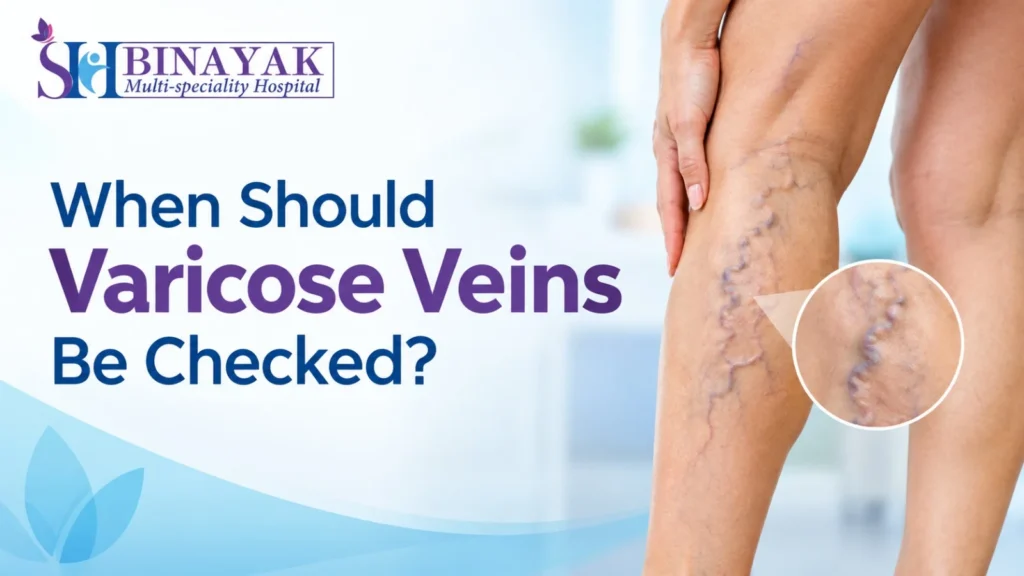
Varicose veins may look harmless, but persistent pain, swelling, skin changes, heaviness, or ulcers can indicate venous disease. Knowing when varicose veins require medical treatment helps patients seek timely evaluation and understand minimally invasive options.
Visible, enlarged veins do not always require a procedure. However, persistent or worsening symptoms should be evaluated by a medical professional.. An interventional radiologist can assess the affected veins using imaging and, when appropriate, discuss image-guided minimally invasive treatment options.
At a Best Multispeciality hospital in north Kolkata, patients may benefit from coordinated evaluation when vascular symptoms overlap with other medical conditions. A dedicated varicose vein treatment clinic in Kolkata can help determine whether conservative care, specialist monitoring, or an intervention is appropriate.
Varicose veins are swollen, enlarged, and twisted veins that most often develop in the legs. They develop when valves inside the veins do not work effectively, allowing blood to pool and increasing pressure within the affected veins.
Common symptoms include:
A clinical assessment is important because similar symptoms can have other causes.
The question “When do varicose veins require medical treatment?” depends on symptoms, examination findings, severity and the underlying venous problem.
Medical assessment is particularly appropriate when:
Mayo Clinic notes that diagnosis can include clinical examination and venous Doppler ultrasound to assess blood flow and identify problems such as blood clots.
Interventional radiology uses imaging guidance to perform minimally invasive procedures through small access points rather than conventional open surgery. AIIMS describes interventional radiology as a specialty using imaging to guide diagnostic and treatment procedures, including venous interventions and laser ablation of varicose veins.
An interventional radiologist may help with:
Therefore, a minimally invasive varicose vein treatment clinic can be relevant for patients whose symptoms are associated with treatable venous reflux or other venous abnormalities.
A proper diagnosis generally comes before treatment.
The doctor may examine the legs while the patient is standing and ask about:
A venous Doppler or duplex ultrasound can evaluate blood movement through the veins and valves. It can help identify abnormal flow and other vascular problems.
The findings from the clinical examination and imaging help the treating specialist determine whether observation, compression, lifestyle measures or an intervention is appropriate.
Treatment depends on the individual venous problem. Evidence-based treatment pathways commonly include endothermal ablation, ultrasound-guided foam sclerotherapy and surgery when less invasive options are unsuitable.
| Treatment approach | How it works | When it may be considered |
| Compression therapy | Supports venous circulation and may reduce symptoms | Selected patients and symptom management |
| Endothermal ablation | Uses heat to close the problematic vein | Suitable symptomatic venous reflux |
| Laser ablation | Uses targeted laser energy to close the problematic vein. | Selected patients after evaluation |
| Radiofrequency ablation | Uses thermal energy to treat the target vein | Appropriate venous anatomy |
| Foam sclerotherapy | Injects a medical foam to close the treated vein | When clinically appropriate |
| Surgery | Removes or ligates affected veins | When less invasive options are unsuitable |
The exact treatment should be selected after clinical and imaging assessment rather than based solely on the appearance of the veins.
For appropriately selected patients, minimally invasive approaches can offer several practical advantages compared with traditional open procedures. Many varicose vein procedures are performed as outpatient treatments, although the exact recovery experience depends on the procedure and individual circumstances.
Potential advantages may include:
These benefits do not mean that every patient is suitable for every technique. Medical history, vein anatomy, symptoms and ultrasound findings remain important.
Before you book an appointment with an interventional radiologist for varicose veins, prepare relevant information about your symptoms and medical history.
Consider noting:
If you already have a Doppler ultrasound report, take it to the consultation.
Lifestyle measures may help manage symptoms, although they do not necessarily correct an underlying venous valve problem.
Depending on individual medical advice, measures may include:
Compression stockings should be selected and used according to appropriate medical advice, particularly for people with other circulation problems. check Patient’s Reviews click:https://shorturl.at/1P6rd
Most varicose vein symptoms are not emergencies, but sudden changes should not be ignored.
Seek prompt medical assessment if you experience:
Sudden leg symptoms can have causes other than uncomplicated varicose veins, including blood clots, so appropriate medical assessment is important.
How Can S.H. Binayak Hospital Support Varicose Vein Evaluation?
S.H. Binayak Hospital is a multispeciality healthcare centre in North Kolkata with diagnostic imaging, specialist departments and interventional radiology facilities. Its diagnostic services include Colour Doppler, CT angiography and interventional radiology.
For patients looking for a Best Multispeciality hospital in north Kolkata, a multispeciality setting can be useful when vascular symptoms require assessment alongside other medical conditions.
The hospital states that its imaging department is led by interventional radiologist Dr. Partha Pratim Samui and that the facility provides minimally invasive interventional radiology services.
Patients seeking a varicose vein treatment clinic in Kolkata should discuss their symptoms with the appropriate specialist and undergo the recommended diagnostic evaluation before choosing a procedure.
The hospital provides appointment and OPD contact options through its official contact channels.
A patient-centred approach should focus on the underlying venous problem rather than treating visible veins alone.
A useful treatment pathway includes:
Symptoms → Clinical examination → Doppler assessment → Diagnosis → Treatment discussion → Follow-up
This approach supports informed decision-making and avoids assuming that every visible varicose vein needs an intervention.
For patients considering a minimally invasive varicose vein treatment clinic, it is important to ask:
Varicose veins should not be judged only by appearance. Persistent pain, swelling, skin changes, ulcers or bleeding can indicate the need for professional evaluation. Doppler assessment helps identify underlying venous problems, while selected patients may benefit from minimally invasive treatment. A specialist consultation can clarify whether observation, conservative management or an image-guided intervention is appropriate. visit our map: https://maps.app.goo.gl/FtVJAncSUjqXgAAm8
When do varicose veins require medical treatment?
Varicose veins may require medical evaluation when they cause persistent pain, swelling, skin changes, ulcers, bleeding or significant interference with daily activities. A specialist can determine whether treatment is necessary.
Can an interventional radiologist treat varicose veins?
Yes. Interventional radiologists can perform selected image-guided venous procedures, including minimally invasive treatments such as laser ablation. AIIMS lists laser ablation of varicose veins among venous interventional procedures.
Is Doppler ultrasound necessary for varicose veins?
A healthcare professional may recommend venous Doppler or duplex ultrasound to assess blood flow, valve function and the underlying venous problem before treatment.
Are varicose veins always dangerous?
No. Many varicose veins do not cause serious complications. However, symptoms such as persistent swelling, skin changes, ulcers or bleeding should be medically assessed.
Is minimally invasive varicose vein treatment suitable for everyone?
No. Suitability depends on symptoms, vein anatomy, ultrasound findings, medical history and the treatment options available. A specialist should determine the appropriate approach.
Can varicose veins disappear without treatment?
Some symptoms may be managed with lifestyle measures or compression, but established varicose veins may persist. Whether treatment is required depends on symptoms and the underlying venous condition.
What happens during a varicose vein consultation?
The specialist generally reviews symptoms and medical history, examines the legs and may recommend venous Doppler ultrasound. The results help determine whether observation, conservative management or an intervention is appropriate.
How can I book an appointment with an interventional radiologist for varicose veins?
Patients can contact the hospital’s OPD or appointment desk and request an appropriate specialist consultation. S.H. Binayak Hospital publishes its hospital, diagnostic and OPD contact numbers on its official contact page.
Why Is High Creatinine Risky? A Kidney Health Guide
12 September, 2026

Why Is Geriatric Medicine Vital for Holistic Senior Health?
14 February, 2026

Why Do Children and Seniors Get Constipation?
13 May, 2026