
By Admin
5 October, 2026
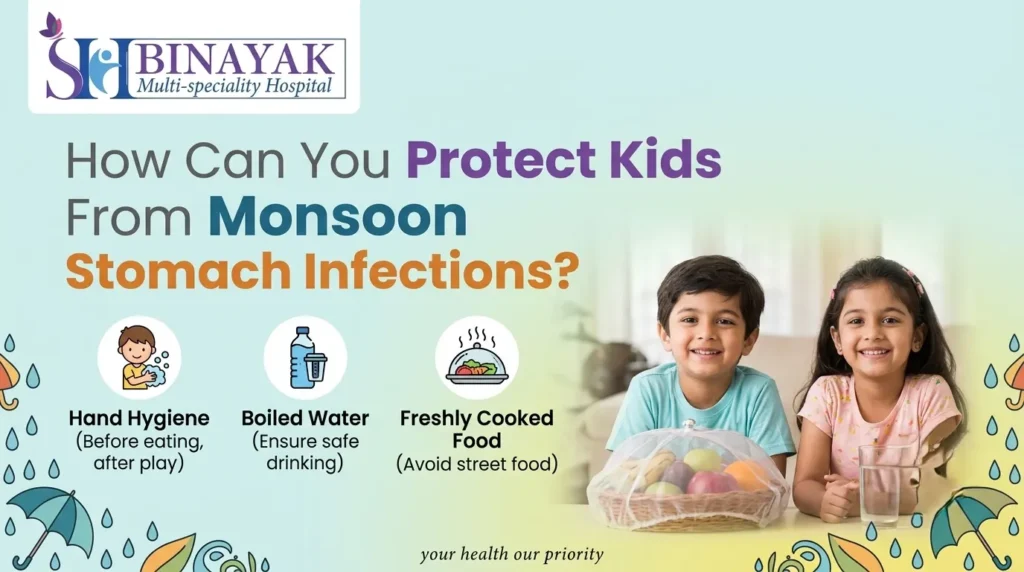
Monsoon stomach infection in kids can cause diarrhea, vomiting, stomach pain, and fever. What causes stomach infections in children during monsoon? Contaminated food or water, poor hand hygiene, and viral or bacterial infections can increase the risk. Parents can reduce exposure by serving safe food and water, encouraging frequent handwashing, keeping surroundings clean, and seeking timely pediatric care when warning signs appear.
Best Paediatric and Newborn Care in Kolkata focuses on timely assessment of childhood illnesses, including digestive infections during the monsoon. At S.H. Binayak Hospital, families can seek appropriate medical evaluation when diarrhea, vomiting, dehydration, fever, or persistent abdominal symptoms concern them. The hospital states that it provides multispecialty care, diagnostics, and round-the-clock emergency services.
A monsoon stomach infection in kids commonly refers to an infection affecting the digestive system during the rainy season. Gastroenteritis may cause diarrhea, vomiting, abdominal cramps, nausea, and sometimes fever learn from Best Multispeciality Hospital in Kolkata.
Viruses are common causes, although bacteria and parasites can also cause gastrointestinal infections. Children can become dehydrated more quickly than adults, particularly when vomiting and diarrhea occur together.
Parents should therefore focus not only on identifying symptoms but also on maintaining hydration and recognizing signs that require medical attention.
What causes stomach infections in children during monsoon? Several factors can increase children’s exposure to gastrointestinal infections:
1. Contaminated Water
Unsafe drinking water can contain disease-causing microorganisms. Children should drink water from a reliable, safe source.
2. Contaminated Food
Food exposed to contaminated water, unclean surfaces, insects, or poor storage conditions may transmit infection.
3. Poor Hand Hygiene
Children frequently touch their mouths, toys, food, and other surfaces. Unwashed hands can transfer germs.
4. Improper Food Storage
Warm and humid conditions can encourage microbial growth when food is stored incorrectly.
5. Unwashed Fruits and Vegetables
Raw produce should be washed properly before consumption.
6. Exposure to Infected People
Some gastrointestinal viruses spread easily between people through contaminated hands, surfaces, or objects.
Symptoms can vary depending on the infection and the child’s age.
| Symptom | What parents may notice |
| Diarrhea | Frequent loose or watery stools |
| Vomiting | Repeated episodes of throwing up |
| Stomach pain | Cramps or abdominal discomfort |
| Fever | Raised body temperature |
| Nausea | Feeling sick or wanting to vomit |
| Poor appetite | Reduced interest in food |
| Weakness | Tiredness or reduced activity |
| Dehydration | Reduced urination, dry mouth, unusual sleepiness, or other concerning signs |
Dehydration deserves particular attention. A child with significant fluid loss may need prompt medical assessment.
Prevention starts with everyday hygiene and food safety.
These habits can reduce exposure to several common sources of gastrointestinal infection.
The first priority is fluid replacement. Oral rehydration solution (ORS) can help replace water and electrolytes lost through diarrhea and vomiting.
Parents should:
Avoid giving children antibiotics or anti-diarrheal medicines without medical advice. Not every stomach infection requires antibiotics, and inappropriate medication can cause harm.
A pediatric consultation for stomach infection becomes particularly important when symptoms are severe, persistent, or accompanied by warning signs.
Seek prompt medical attention if a child has:
For babies and young children, parents should have a lower threshold for contacting a healthcare professional because dehydration can develop quickly.
Dehydration is one of the most important complications to watch for during diarrhea and vomiting.
The exact signs can vary with age and severity. If you suspect significant dehydration, seek medical assessment rather than relying solely on home care. Check patient’s reviews click: https://shorturl.at/rNL4B
Yes. Food preparation and storage become especially important during the rainy season.
Parents can reduce risk by checking:
Water → Food preparation → Cooking → Storage → Serving → Hand hygiene
This simple chain helps identify where contamination might occur.
| Practice | Why it matters |
| Use safe water | Reduces exposure to waterborne pathogens |
| Cook food thoroughly | Helps reduce viable disease-causing organisms |
| Wash produce | Removes dirt and potential contaminants |
| Keep cooked food covered | Reduces exposure to insects and environmental contamination |
| Refrigerate perishables | Helps limit microbial growth |
| Wash hands | Reduces person-to-person transmission |
Children may become unwell quickly when vomiting and diarrhea cause substantial fluid loss. Early assessment can help determine whether the child needs home-based supportive care, monitoring, diagnostic evaluation, or further treatment.
A pediatric consultation for stomach infection can also help distinguish a straightforward gastrointestinal infection from conditions that may require a different approach.
For families looking for Best Paediatric and Newborn Care in Kolkata, choosing a healthcare setting with access to appropriate pediatric assessment and supporting diagnostic services can be valuable.
Parents may want to book a child specialist for diarrhea and vomiting when symptoms persist, recur, become severe, or cause concern about dehydration.
A consultation can be especially useful when:
Timely professional evaluation can provide reassurance and help identify complications early.
Some common responses may not be appropriate without professional advice.
Avoid Unnecessary Antibiotics
Many childhood gastroenteritis cases are viral. Antibiotics do not treat viral infections and should only be used when a clinician considers them appropriate.
Avoid Unsupervised Anti-Diarrheal Medicines
Some medicines used for adults may not be suitable for children. Always obtain pediatric guidance before giving medication.
Avoid Ignoring Hydration
Food may be temporarily less important than maintaining adequate fluid intake when a child has substantial vomiting or diarrhea.
Avoid Delaying Care During Warning Signs
Severe dehydration, blood in stool, persistent vomiting, altered responsiveness, or severe abdominal pain warrants medical evaluation.
How Does Monsoon Hygiene Support Children’s Digestive Health?
Monsoon hygiene is part of a broader child health and infection-prevention content cluster. Parents can connect digestive health with:
This broader approach helps families think about prevention instead of focusing only on treating symptoms after infection occurs. Check Our Youtube link : https://www.youtube.com/watch?v=xGDpsH145Vw
.
Monsoon stomach infection in kids can often be reduced through safe water, clean hands, careful food preparation, and proper storage. Parents should watch closely for dehydration, persistent vomiting, blood in stools, severe pain, or worsening symptoms. Early pediatric assessment can support timely care when warning signs appear. Practical prevention and prompt medical attention together can protect children’s digestive health during monsoon. Check Our Map Link click: https://maps.app.goo.gl/xrHGctXXqr5aoayi6
What causes stomach infections in children during monsoon?
Common causes include viral infections, contaminated food or water, inadequate hand hygiene, poor food storage, and contact with infected people. Different microorganisms can cause similar symptoms.
What are the symptoms of monsoon stomach infection in kids?
Common symptoms include diarrhea, vomiting, abdominal cramps, nausea, fever, reduced appetite, and weakness. Dehydration may develop when fluid losses are significant.
How can I prevent stomach infections in my child during the monsoon?
Use safe drinking water, wash hands regularly, clean fruits and vegetables, cook food thoroughly, store food safely, and maintain good household hygiene.
What should I give a child with diarrhea and vomiting?
Oral rehydration solution can help replace fluids and electrolytes. Continue age-appropriate feeding and breastfeeding where applicable. Seek pediatric advice when symptoms are severe or concerning.
When should I take my child to a doctor for diarrhea?
Seek medical attention for dehydration, persistent vomiting, blood in stool, severe abdominal pain, significant weakness, concerning fever, reduced urination, or worsening symptoms.
Can children take antibiotics for stomach infections?
Not every stomach infection requires antibiotics. Many are viral. A pediatrician should determine whether antibiotics are appropriate based on the child’s symptoms and clinical assessment.
Is vomiting dangerous for children during monsoon?
Vomiting can become concerning when it prevents a child from drinking enough fluids and leads to dehydration. Repeated vomiting or signs of dehydration require prompt medical advice.
Why is ORS important during childhood diarrhea?
ORS provides water and essential electrolytes that help replace losses caused by diarrhea and vomiting. It should be prepared and given according to the product instructions or healthcare guidance.
For families seeking Best Paediatric and Newborn Care in Kolkata, reliable pediatric evaluation matters when a child’s digestive symptoms are persistent or severe. S.H. Binayak Hospital describes its approach as patient-centred and provides multispecialty care, diagnostics, ICU, emergency, and other hospital services.
The hospital’s published information lists its location as 59 Kalicharan Ghosh Road, Kolkata–700050 and states that its emergency, ICU, and diagnostic services operate around the clock.

Why Is High Creatinine Risky? A Kidney Health Guide
12 September, 2026

Why Is Geriatric Medicine Vital for Holistic Senior Health?
14 February, 2026

Why Do Children and Seniors Get Constipation?
13 May, 2026