
By Admin
14 May, 2026
Hello Reader!
Welcome to the blog page of S.H. Binayak Hospital, one of the best multispeciality hospital in North Kolkata.
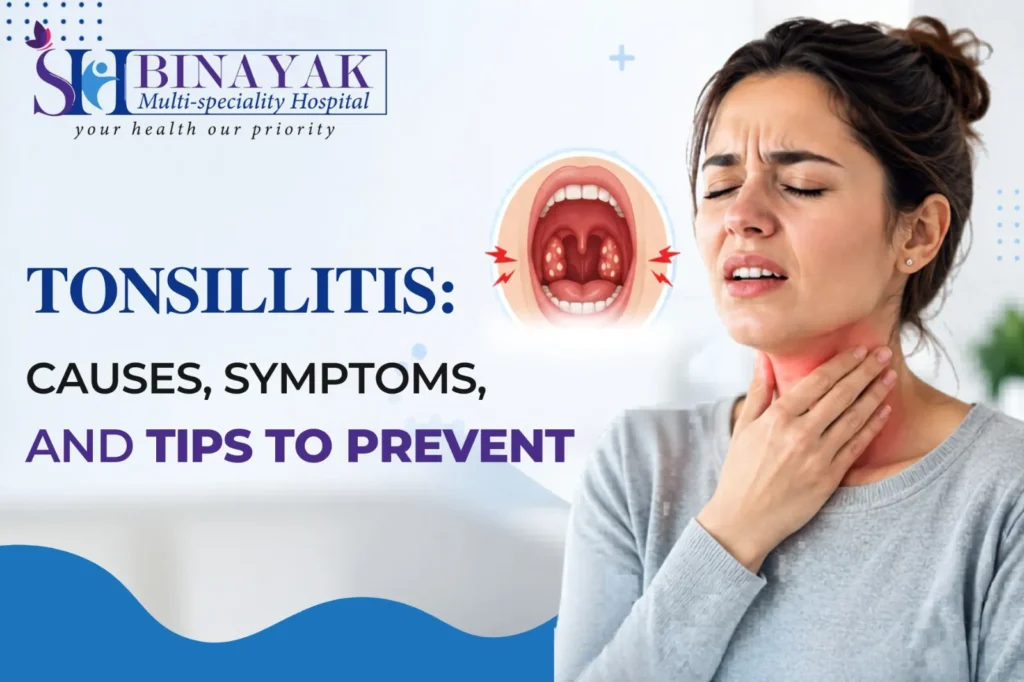
Tonsillitis is a common throat condition that affects people of all ages, especially children and teenagers. It occurs when the tonsils become inflamed due to viral or bacterial infections. While mild cases can often improve with home care, severe or recurrent infections may require medical attention and specialized treatment.
At S.H. Binayak, recognized as the Best Multispeciality Hospital in North Kolkata, patients receive advanced diagnosis and comprehensive care for throat infections and ENT-related conditions. Understanding the causes, symptoms, and prevention methods of Tonsilitis can help individuals seek timely treatment and avoid complications.

The tonsils are two oval-shaped tissues located at the back of the throat. They play an important role in protecting the body from infections by trapping germs entering through the mouth and nose.
Tonsilitis occurs when these tonsils become infected and swollen. The condition may be acute, recurring occasionally, or chronic with long-term symptoms.
Although Tonsilitis is very common, it should not be ignored if symptoms become severe or frequent. Proper diagnosis at the Best Multispeciality Hospital in North Kolkata can help identify the underlying cause and provide effective treatment.
Several factors can lead to the development of Tonsilitis. Viral infections are the most common cause, but bacterial infections may also be responsible.
Many cases of Tonsilitis are caused by viruses such as:
Viral tonsillitis usually improves with rest and supportive care.
One of the major bacterial causes is Streptococcus bacteria, which can lead to strep throat and severe throat inflammation.
Bacterial Tonsilitis may require antibiotic treatment to prevent complications.
Individuals with weakened immune systems are more vulnerable to infections affecting the throat and tonsils.
Close contact with infected individuals can increase the risk of developing Tonsilitis, especially in schools, offices, and crowded places.
Pollution, smoking, dust exposure, and sudden weather changes may irritate the throat and contribute to repeated infections.
The ENT specialists at the Best Multispeciality Hospital in North Kolkata often recommend preventive care and lifestyle modifications to reduce recurrent tonsil infections.

The symptoms of Tonsilitis can vary depending on the severity and cause of the infection.
One of the earliest and most common symptoms is severe throat pain.
Inflamed tonsils can make swallowing painful and uncomfortable.
The tonsils may appear enlarged, red, and sometimes covered with white or yellow patches.
Many patients experience fever along with chills and body ache.
Persistent throat infection can lead to unpleasant breath odor.
Tender glands in the neck are commonly seen in patients with Tonsilitis.
In some cases, pain may spread to the ears due to throat inflammation.
Patients may feel tired and exhausted during the infection.
If symptoms persist for several days or worsen, it is important to seek medical help at the Best Multispeciality Hospital in North Kolkata.
This type lasts for a few days to two weeks and is usually caused by viral or bacterial infections.
Patients who experience multiple episodes of throat infections in a year may have recurrent Tonsilitis.
Long-term inflammation causing persistent sore throat, bad breath, and swollen tonsils is known as chronic tonsillitis.

Ignoring severe or repeated Tonsilitis may lead to complications.
Pus may collect around the tonsils, causing severe pain and swelling.
Enlarged tonsils can sometimes obstruct breathing, especially during sleep.
Untreated bacterial infections may spread to nearby tissues or other parts of the body.
Certain untreated streptococcal infections can affect the heart, joints, and nervous system.
Timely diagnosis and treatment at the Best Multispeciality Hospital in North Kolkata can help prevent these complications.
Also Read: Cholera in Children: Symptoms Parents Should Never Ignore

Doctors usually diagnose Tonsilitis through physical examination and symptom assessment.
The doctor checks for swollen tonsils, redness, and throat inflammation.
A throat swab may be taken to identify bacterial infections.
In some cases, blood tests are recommended to determine the severity and cause of infection.
At the Best Multispeciality Hospital in North Kolkata, advanced diagnostic facilities ensure accurate and prompt evaluation of throat conditions.
Tonsillectomy (removal of the tonsils) is not needed for every case of tonsillitis; it is usually recommended only when infections are frequent, severe, or when the tonsils are causing other problems such as breathing or sleep‑related issues. For most people, a simple episode of tonsillitis can be treated with medicines and rest. However, there are clear situations where an ENT specialist may suggest a tonsillectomy.
A tonsillectomy is typically considered when:
These are commonly called “recurrent tonsillitis.” If medicines keep giving only temporary relief and the child or adult keeps getting sick, a tonsillectomy may be advised to reduce future infections and improve quality of life.
Tonsillectomy can also be recommended when:
In such cases, removing the tonsils can lower the risk of serious complications and repeated courses of strong antibiotics.
Tonsils that are enlarged and chronically swollen can block the airway, especially during sleep. A tonsillectomy (often with adenoidectomy in children) may be recommended if:
Here, the surgery is done not only for tonsillitis but to improve breathing and sleep quality, which is especially important in growing children.
Sometimes a tonsillectomy is advised even if the number of infections is not very high, for example:

Tonsillectomy is generally considered safe for both adults and children, but the risks, recovery, and overall experience differ somewhat between the two age groups. Modern studies show that serious complications are rare in both adults and kids, so the procedure is usually done when the benefits (fewer infections, better breathing, better sleep) clearly outweigh the risks.
In other words, tonsillectomy is not “dangerous” for adults, but it is more challenging physically and in recovery than it is for children.


Tonsillectomy is usually recommended only after:
In both adults and children, a detailed pre‑operative evaluation (including co‑existing heart, lung, or bleeding disorders) is done to maximise safety. If performed at a well‑equipped centre by an experienced ENT‑head‑neck surgeon, tonsillectomy is a safe and effective option for appropriate patients, whether child or adult.
Tonsillectomy is commonly performed in children (often 3–7 years old) but can also be done in adults with recurrent tonsillitis or sleep‑related breathing problems. The decision is always individualised, weighing the frequency and severity of symptoms against the small risks of surgery, such as bleeding or pain after the operation.
If you or your child in North Kolkata have frequent sore throats due to tonsillitis, it is important to consult an ENT specialist at a trusted centre such as the Best Multispeciality Hospital in North Kolkata to discuss whether a tonsillectomy is the right option.
The treatment depends on whether the infection is viral or bacterial.
Mild cases of Tonsilitis can often improve with:
Doctors may prescribe:
For recurrent or chronic Tonsilitis, surgical removal of the tonsils may be recommended.
The ENT experts at the Best Multispeciality Hospital in North Kolkata provide personalized treatment plans based on the patient’s condition and age.

Preventive measures can significantly reduce the risk of throat infections.
Regular handwashing helps prevent the spread of germs.
Do not share utensils, water bottles, or toothbrushes with infected individuals.
Drinking enough water keeps the throat moist and healthy.
A balanced diet, proper sleep, and regular exercise help improve immunity.
Smoke and pollutants irritate the throat and increase infection risk.
This helps reduce the spread of viruses and bacteria.
Prompt treatment of throat infections can prevent complications and recurrence.
The specialists at the Best Multispeciality Hospital in North Kolkata encourage regular ENT consultations for individuals suffering from repeated tonsillitis episodes.
Medical attention is necessary if you experience:
Ignoring these warning signs may lead to serious complications.

Tonsillitis is usually caused by viruses (like cold or flu viruses) or bacteria (such as Streptococcus causing strep throat). These germs spread through coughing, sneezing, or sharing utensils with an infected person.
Common symptoms include sore throat, red and swollen tonsils (sometimes with white or yellow patches), fever, headache, painful swallowing, and swollen neck glands. Children may become fussy, refuse to eat, or drool.
You should see a doctor if throat pain lasts more than 3–4 days, if you have high fever, trouble breathing or swallowing, pus on the tonsils, or if a child appears very ill or dehydrated.
Yes. Practice good hand hygiene, avoid sharing food or drinks with sick people, cover your mouth while coughing or sneezing, eat a healthy diet, and try to avoid smoking and polluted air to reduce the risk of recurrent tonsillitis.
Tonsillectomy is usually considered if a child or adult has frequent severe episodes (e.g., 7 or more in a year), sleep‑related breathing problems from enlarged tonsils, or repeated complications such as abscesses or very poor response to medicines.
Tonsilitis is a common but uncomfortable condition that can affect daily life and overall well-being. While many cases improve with proper rest and care, recurrent or severe infections require expert medical evaluation and treatment.
Understanding the causes, symptoms, and preventive measures of Tonsilitis can help individuals take timely action and protect their throat health. Early diagnosis is especially important to avoid complications and ensure faster recovery. You can visit S.H Binayak for better diagnosis and treatment.

Why Is Geriatric Medicine Vital for Holistic Senior Health?
14 February, 2026
Why Do Children and Seniors Get Constipation?
13 May, 2026

Why Are You Forgetting Things So Easily?
27 April, 2026